Showing posts with label 心. Show all posts

Sunday, 20 July 2025

忘 | wàng | wáng

In Mandarin Chinese, 忘 (Pinyin: wàng 🔊 or wáng 🔊) means “to forget”.

According to Wiktionary, 忘 is both phono-semantic and ideogrammic compound:

phonetic 亡 (OC *maŋ, “to lose, disappear, flee”) + semantic 心 (“heart”).

Lawrence J. Howell writes in his Etymological Dictionary of Han/Chinese Characters:

As per 亡 (obscure) + 心 heart/emotions → obscure state of mind, in the form of forgetfulness or overlooking something → forget; overlook; leave behind.

As forgetting usually has negative connotations, 忘 is often found in combination with 不 “not”: 不忘 (bù wàng), “don’t forget”:

  • 念 + 念 + 不 + 忘 = 念念不忘 (niàn niàn bù wàng): to keep in mind constantly; to never forget
  • 永 + 志 + 不 + 忘 = 永志不忘 (yǒng zhì bù wàng): to remember forever and never forget
  • 安 + 不 + 忘 + 危 = 安不忘危 (ān bù wàng wēi): to be mindful of possible danger in time of peace

But why should it have negative connotations? One of my university professors used to call the ability to forget a golden feature of our brain. Without it, our memories, to quote Funes the Memorious, would be “like a garbage heap”. Not only that. In his Nobel Lecture, Elie Wiesel said:

it is surely human to forget, even to want to forget. The Ancients saw it as a divine gift. Indeed if memory helps us to survive, forgetting allows us to go on living.

Like other hanzi with 心 in the lower part (思, 想, 念, 意, 息), 忘 reminds me of a sailship.

Other compounds of 忘 include

  • 忘 + 我 = 忘我 (wàngwǒ): selfless
  • 忘 + 年 = 忘年 (wàngnián): to disregard age
  • 忘年 + 交 = 忘年交 (wàngniánjiāo): friend despite the difference in age
  • 勿 + 忘 + 草 = 勿忘草 (wùwàngcǎo): forget-me-not

Haiku time! In Japanese, the verb “to forget” is 忘れる (わすれる), wasureru. Here are three haiku where you can see the stem 忘れ, wasure:

燕や
何を忘れて
中がへり
乙由
Tsubakuro ya nani wo wasurete chūgaeri
The swallow
Turns a somersault;
What has it forgotten?
Otsuyu

長閑さや
早き月日を
忘れたり
太祇
Nodokasa ya hayaki tsukihi wo wasuretari
Calm days,
The swift years
Forgotten.
Taigi

忘れ草は
咲󠄁けど忘れね
昔哉
諸九尼
Wasuregusa wa sakedo wasurenu mukashi kana
The forget-me-not is blooming;
But the things of long ago, —
How can I forget them?
Shokyū-ni *

(All haiku translated by R.H. Blyth)

More photos related to thought, day-lily, forget-me-not, hanzi and calligraphy @ Shutterstock.


* In Blyth’s book (Haiku vol. 3, Summer—Autumn, Hokuseido Press, 1952, p. 313), this haiku appears as
わすれ草は咲󠄁けどわすれね昔哉
For the purposes of this post, I took the liberty to replace わす with 忘. Blyth also writes in a footnote to the word “forget-me-not” (ibid., p. 314):
The Japanese is a “forget-me” flower, the day-lily.
In other words, 忘れ草, which Blyth translated as “forget-me-not”, is a completely different flower, Hemerocallis fulva. Shokyū-ni (1714—1781) probably wasn’t even aware of the European forget-me-not, Myosotis sylvatica. According to Wiktionary, the word 忘れな草 (wasurenagusa), a calque of English forget-me-not, was first attested in 1913. So it seems that, for the benefit of English readers, Blyth radically changed the meaning of the haiku. It really should be
The “forget-me” flower is blooming;
But the things of long ago, —
How can I forget them?
This makes much more sense.

Thursday, 23 May 2024

息 | xī | xí

In Mandarin Chinese, 息 (Pinyin: xī 🔊 or xí 🔊) is a word of many meanings. As a verb, it can stand for “to breathe”, “to sigh”, “to blow”; “to stop”, “to cease”, “to rest”, “to calm down”; “to grow”, “to develop”. As a noun, it can mean “breath”, “life”, “(one’s) child”, “news”, “message”, “interest” or “dividends”.

According to Wiktionary, 息 is an ideogrammic compound of 自 “nose” and 心, “heart-mind”, meaning “to breathe (life) through one’s nose”. Likewise, Lawrence J. Howell writes in his Etymological Dictionary of Han/Chinese Characters:

As per 自 (nose) + 心 heart/emotions → breathe through the nostrils in rhythm with the beating of the heart → breath → live → give birth; increase. Also, stop; rest (← stops and starts of steady breathing); interest (← increase); son (← give birth).

It’s curious how the logical extension of “breath” leads to the almost opposite meanings of “growth” (to breath is to live, to live is to grow and give birth) and “rest” (cf. English “take a breather”). I find it very Yin-Yang-y: in order to keep living, you need to take a rest!

Like other hanzi containing 心 in the lower part (e.g. 思, 想, 念, 意), 息 reminds me of a sailship. It’s resting but perfectly ready to go.

Compounds of 息 include

  • 息 + 男 = 息男 (xīnán, xínán): (one’s) son
  • 息 + 女 = 息女 (xīnǚ, xínǚ): (one’s) daughter
  • 息 + 怒 = 息怒 (xīnù, xínù): to calm down; to not be angry
  • 息 + 息 + 相 + 关 = 息息相关 (xīxīxiāngguān, xíxíxiāngguān): to be closely linked
  • 休 + 息 = 休息 (xiūxi 🔊, xiūxí): to rest; to take a break
  • 太 + 息 = 太息 (tàixī, tàixí): to sigh
  • 子 + 息 = 子息 (zǐxī, zǐxí): son; the next generation; (monetary) interest
  • 气 + 息 = 气息 (qìxí, qìxí): breath; smell, odour, flavour; style, appeal; spirit
  • 安 + 息 = 安息 (ānxī 🔊, ānxí): to rest; to rest in peace
  • 出 + 息 = 出息 (chūxi 🔊): prospects, promise, future
  • 月 + 息 = 月息 (yuèxī, yuèxí): monthly interest

In Japanese, 息, in its “breath” meaning, is pronounced iki (いき). Here’s a poem by John White (1924—2021) called The Breath in the Flute (笛の息), from the book of the same name.

The breath in the flute
is the sound of life stirring
springtime and sadness
John White
笛の息
いのち動く音
春と悲しみ
Fue no iki
inochi ugoku oto
haru to kanashimi

More photos related to rest, hanzi and calligraphy @ Shutterstock.

Thursday, 20 July 2023

喜 | xǐ

In Mandarin Chinese, 喜 is a word with a number of meanings — and three similar but different pronunciations.

  1. 喜 (Pinyin: xǐ 🔊)
      adj. happy, joyful, celebratory;
      n. pregnancy (that is, a happy event);
      v. to like, to love, to enjoy
  2. 喜 (Pinyin: xī 🔊)
    1. Archaic form of 嬉 v. to enjoy, to play
    2. Alternative form of 熙 adj. bright, splendid, glorious
  3. 喜 (Pinyin: chì), a variant form of 饎
      n. food
      v. to cook

According to Wiktionary, 喜 is an ideogrammic compound of 壴 “drum” and 口 “mouth”. In its turn, 壴 is said to be a pictogram of a “drum 口 with two ends, a base and feathers 土 on top”. It’s not clear what “two ends” refer to. Does it mean that the drum is placed horizontally? But historical forms of 喜 contain a variety of “drums” — some look like djembe and others like timpani.

Lawrence J. Howell writes in his Etymological Dictionary of Han/Chinese Characters:

As per 壴 as described in 鼓 (round drum set on a stand) + 口 mouth → joyful voices at a feast with musical accompaniment → joy; gladness; like; be fond of; pleasure; happiness → good; desirable; congratulations.

Food and samba: totally my kind of party.

An alternative form of this character, 憙, contains our old friend 心, “heart-mind”:

Combining 喜 with another word for joy, 乐, we get 喜乐 (xǐlè), which means, well, “joy”. Happy joy. Real joy. Not any old semblance of joy but, you know — joy joy.

Other compounds of 喜 include:

  • 喜 + 爱 = 喜爱 (xǐ'ài): to like, to be fond of, to be keen on, to love
  • 喜 + 好 = 喜好 (xǐhào): to like, to be fond of, to be keen on
  • 喜 + 气 = 喜气 (xǐqì): cheerful atmosphere
  • 喜 + 感 = 喜感 (xǐgǎn): (neologism) comical, funny, humorous
  • 喜 + 雨 = 喜雨 (xǐyǔ): welcome rain (after a drought)
  • 大 + 喜 = 大喜 (dàxǐ): (literary) very happy, overjoyed; good news; wedding

I just came across this beautiful poem attributed to Tsangyang Gyatso, 6th Dalai Lama (1683—1706); some alternative translations are here.

你见,或者不见我
我就在那里
不悲不喜
Whether you see me or not
I’m right here
Not sad not glad
你念,或者不念我
情就在那里
不来不去
Whether you miss me or not
The affection is right here
Not rising not falling
你爱,或者不爱我
爱就在那里
不增不减
Whether you love me or not
The love is right here
No more no less
你跟,或者不跟我
我的手就在你手里
不离不弃
Whether you accompany me or not
My hand is in yours
Not clinging not giving
来我的怀里
或者让我住进你的心里
默然 相爱
寂静 欢喜
Come into my arms
Or let me reside in your heart
Love with serenity
Rejoice in silence

More photos related to joy, happiness, hanzi and calligraphy @ Shutterstock.

Tuesday, 23 May 2023

感 | gǎn

In Mandarin Chinese, 感 (Pinyin: gǎn 🔊) is a word of many meanings. As a verb, it can stand for “to feel”, “to perceive”; “to affect”, “to move”, “to touch”; “be affected by”, “be sensitive to”; “be grateful”, “to thank”; “to long for”, “to miss”, “to be sentimental”, “to sigh with emotion”. As a noun, it can mean “emotion”, “feeling”, “sensation”, “sense” or “thought”.

According to Wiktionary, 感 is a phono-semantic compound of phonetic 咸 and semantic 心, “heart-mind”. Remembering that 心 includes both heart and mind, it’s not difficult to see why Chinese can use the same word 感 for both “emotion” and “thought”.

Lawrence J. Howell writes in his Etymological Dictionary of Han/Chinese Characters:

咸 (shut) + 心 heart/emotions → emotion/feeling that shuts off sensation (= moves/affects one to the point of muteness or immobility).

However, 咸 really means “all”, “completely”, “together” or “united”. Could the whole combination be “to feel with all heart”?

感 is a simplified form of a traditional character 感. There is a subtle difference between these two. In the traditional 感, the “heart” 心 is drawn inside of the 咸 component, directly below the 口. In the simplified 感, the 心 is placed below the whole 咸 bit.

感 are often combined with other hanzi containing 心 (or its radical form, 忄), for example:

  • 感 + 想 = 感想 (gǎnxiǎng 🔊): impressions, reflections, thoughts; to miss, to reminisce, to think of, to yearn for
  • 感 + 念 = 感念 (gǎnniàn): to recall fondly; to recall sadly
  • 快 + 感 = 快感 (kuàigǎn): delight, joy, pleasant feeling, pleasure, thrill

Some more compounds of 感:

  • 感 + 激 = 感激 (gǎnjī 🔊): to be grateful
  • 感 + 人 = 感人 (gǎnrén): heart-warming, moving, touching
  • 白 + 感 = 百感 (bǎigǎn): all kinds of feelings and emotions
  • 好 + 感 = 好感 (hǎogǎn): good feeling; goodwill; favour
  • 口 + 感 = 口感 (kǒugǎn): mouthfeel, taste
  • 手 + 感 = 手感 (shǒugǎn): feel, touch
  • 美 + 感 = 美感 (měigǎn): sense of beauty
  • 音 + 感 = 音感 (yīngǎn): sense of rhythm, pitch, sound, tone quality, etc.

Now for a bit of poetry. Chunwang (春望) is recognised as one of the “best and best-known works” by the Tang dynasty poet Du Fu (杜甫, 712—770). The poem is notoriously difficult to translate. With 春 (chūn) meaning “spring” and 望 (wàng) “to observe”, “to watch”, “to hope”, the title of the poem has been variously rendered as “Spring View”, “Spring Scene”, “Spring Gaze”, “Spring Outlook”, “Spring Prospect”, “Spring Hope” and so on. I like the translation by Vikram Seth, although the name he gave it, Spring Scene in Time of War, conveys more information than needed.

春望
(simplified)
国破山河在
城春草木深
感时花溅泪
恨别鸟惊心
烽火连三月
家书抵万金
白头搔更短
浑欲不胜簪
春望
(traditional)
國破山河在
城春草木深
感時花濺淚
恨別鳥驚心
烽火連三月
家書抵萬金
白頭搔更短
渾欲不勝簪
杜甫

Spring Scene in Time of War

The state lies ruined; hills and streams survive.
Spring in the city; grass and leaves now thrive.
Moved by the times, the flowers shed their dew.
The birds seem startled; they hate parting too.
The steady beacon fires are three months old.
A word from home is worth a ton of gold.
I scratch my white hair which is grown so thin
It soon won’t let me stick my hat pin in.
Du Fu
(Translated by Vikram Seth)

More photos related to thought, hanzi and calligraphy @ Shutterstock.

Tuesday, 20 July 2021

念 | niàn

In Mandarin Chinese, 念 (Pinyin: niàn 🔊) is a word with many meanings. As a verb, it can mean “to miss”, “to long for”, “to think of”, “to recall”, “to consider”, “to contemplate”, “to worry”, “to be anxious about”, “to feel compassion for”, “to show affection for”, “to commemorate”, “to pay tribute to”, as well as “to study”, “to learn”, “to read aloud” or “to chant”. As a noun, it can mean “idea”, “thought” or “memory”.

Lawrence J. Howell writes in his Etymological Dictionary of Han/Chinese Characters:

As per 今 (contain) + 心 heart/emotions → thought/idea contained deep within the heart (compare 意) → caution (← profound idea).

Once again, Howell mentions the meaning “contain”, this time for 今. However, 今 really means “current”, “now”, “present”. On the other hand, 含, itself a phono-semantic compound of 今 and 口, in addition to its original sense “to keep in the mouth”, can indeed mean “to contain”, “to harbor”, etc. Could it be that 口 “mouth” in 含 simply got replaced with 心 “heart”, so 含 “to keep in the mouth” → 念 “to keep in the heart”?

Some compounds of 念 include

  • 意 + 念 = 意念 (yìniàn): thought, notion, will
  • 思 + 念 = 思念 (sīniàn 🔊): to miss, to think of, to yearn for, to reminisce
  • 想 + 念 = 想念 (xiǎngniàn 🔊): to miss, to think of, to yearn for, to reminisce
  • 念 + 想 = 念想 (niànxiǎng): to miss, to cherish; thought, idea, impression; souvenir, keepsake, memento
  • 念 + 白 = 念白 (niànbái): spoken parts of a Chinese opera
  • 念 + 念 + 不 + 忘 = 念念不忘 (niànniàn bù wàng): to keep in mind constantly; to never forget

念 is a simplified form of a traditional character 念, which is also used in Japanese. As you can see, there is no much difference, apart from the stroke under the “roof” 𠆢.

In Japanese, 念 is pronounced nen (ねん) and means “thought”, “feeling”, “care” or “concern”.

念入て
尺とる虫や
菊の花
一茶
nen irete sashi toru mushi ya kiku no hana
carefully measured
by the inchworm...
chrysanthemum
Issa

(Translated by David G. Lanoue)

More photos related to thought, hanzi and calligraphy @ Shutterstock.

Friday, 16 April 2021

意 | yì

In Mandarin Chinese, 意 (Pinyin: yì 🔊) is a word with many meanings, one of which, by the way, is “meaning”. It also can mean “thought”, “idea”, “opinion”, “mind”, “heart”, “soul”, “conscience”, “intention”, “wish”, “desire”... Also, 意 is short for 意大利 (Yìdàlì 🔊), “Italy”.

At the base of 意 — or shall I say, at its heart? — is our old friend 心, “heart-mind”. But what’s on top? According to Wiktionary,

Modern form is a compound of 音 and 心 (“heart”). However, the top component is etymologically unrelated to 音.

Lawrence J. Howell writes in his Etymological Dictionary of Han/Chinese Characters:

As per 音 (contained) + 心 heart/emotions → keep contained in the heart (compare 念) → (deep) thought; mind; signification.

But I can’t find the meaning “contained” for 音. Instead, it has many other meanings, all ultimately related to sound, and it is pronounced yīn (🔊). So I think I can safely say that 意 is a phono-semantic compound of phonetic 音 and semantic 心.

Many compounds of 意 include

  • 意 + 中 + 人 = 意中人 (yìzhōngrén): the person one has in mind, the object of one’s affections, one’s beloved
  • 意 + 思 = 意思 (yìsi 🔊, yìsī): meaning, significance; interest, fun; hint, trace; opinion, view; token of appreciation; friendship, camaraderie
  • 好 + 意思 = 好意思 (hǎoyìsi, hǎoyìsī): to feel no shame; to have the nerve; to dare
  • 好 + 意 = 好意 (hǎoyì 🔊): good intention; kindness
  • 美 + 意 = 美意 (měiyì): good intention; kindness
  • 中 + 意 = 中意 (zhòngyì 🔊): to be to one’s liking; to catch the fancy of
  • 生 + 意 = 生意: 1. (shēngyi): business, trade; 2. (shēngyì): vitality
  • 大 + 意 = 大意 (dàyì 🔊): (n.) general idea, main points; (adj.) careless, negligent
  • 天 + 意 = 天意 (tiānyì): will of heaven, God’s will, providence; will of the emperor
  • 公 + 意 = 公意 (gōngyì): will of the public
  • 心 + 意 = 心意 (xīnyì): feelings; intention, purpose, intent, inclination, disposition; friendly regard, affection
  • 一 + 心 + 一 + 意 = 一心一意 (yīxīnyīyì): heart and soul; wholeheartedly
  • 三 + 心 + 二 + 意 = 三心二意 (sānxīn'èryì): shilly-shally; half-hearted

More photos related to thought, hanzi and calligraphy @ Shutterstock.

Monday, 22 February 2021

安 | ān

In Mandarin Chinese, 安 (Pinyin: ān 🔊) has many meanings but most of them are related to the concepts of peace and security. It could be an adjective meaning “calm”, “peaceful”, “tranquil”, “quiet”, “comfortable”, “safe”, “secure”, or a verb for “to calm”, “to be content with”, “to place”, “to find a place for”, “to fit”, “to set up”, “to bring”, “to cherish”, “to harbour”. In physics, 安 is short for 安培 (ānpéi), “ampere”.

Lawrence J. Howell writes in his Etymological Dictionary of Han/Chinese Characters:

宀 roof/building + 女 woman → woman resting/at ease indoors → be at ease/peace → cheap; inexpensive (← cheap enough to be purchased with ease).

The meaning “cheap”, however, is specific for Japanese, where the word 女 (あん; an) has an additional sense in chemistry for “ammonium”. Also, according to Ponte Ryūrui,

The modern form of the hiragana character あ comes from the cursive form of the kanji 安.

Back to Chinese — many compounds of 安 include

More photos related to calmness, calligraphy and sea glass @ Shutterstock.

Saturday, 6 February 2021

快 | kuài

In Mandarin Chinese, 快 (Pinyin: kuài 🔊) is an adjective with many meanings: “fast”, “quick”, “sharp”, “clever”, “frank”, “straightforward”, “pleased”, “happy”. It is also used as an adverb meaning “soon” or “almost”.

According to Wiktionary, 快 is a phono-semantic compound of phonetic 夬 (guài) and semantic 忄, a radical form of 心, “heart/mind”.

Lawrence J. Howell writes in his Etymological Dictionary of Han/Chinese Characters:

As per 夬 (scoop out) + 心 heart/emotions → pleasant; comfortable (← heart with all the unpleasantness scooped out of it) → refreshing; enjoyable.

Compounds of 夬 include

  • 快 + 人 = 快人 (kuàirén): a frank and open person
  • 快 + 门 = 快门 (kuàimén): shutter (of a camera)
  • 手 + 快 = 手快 (shǒukuài): fast; having quick hands
  • 飞 + 快 = 飞快 (fēikuài): 1) razor sharp; 2) extremely fast, at lightning speed
  • 大 + 快 + 人 + 心 = 大快人心 (dàkuàirénxīn): to everybody’s satisfaction

More photos related to fast stuff, hanzi and calligraphy @ Shutterstock.

Monday, 20 July 2020

想 | xiǎng

In Mandarin Chinese, 想 (Pinyin: xiǎng 🔊) stands for “to think”, “to guess”, “to miss”, “to want”, “to wish for”, “would like”, etc. Thus 我想你 or 我想妳 (wǒ xiǎng nǐ) may mean “I miss you” or “I think about you”, just as is the case with 思. However, there are some subtle differences between the two. For instance, one would use 我想你 (rather than 我思你) to say “I miss you” to a person one is romantically attracted to, perhaps in a hope to hear 我也想你, “I miss you too”.

According to Wiktionary, 想 is a phono-semantic compound of semantic 心, “heart/mind”, and phonetic 相 (xiāng 🔊) which, in its turn, is an ideogrammic compound of our old friend 木 “tree” and 目 “eye”. So 相 — literally “watching the tree”— is translated as “to see for oneself” or “evaluate”; it also could be used as an adverb meaning “mutually”, “reciprocally”, “towards each other”, “one another”, “together” and suchlike. I, or the folk etymologist in me, would like to think (can I say 我想思?) that 相 brings not just phonetics but also this implicit reciprocity into 想. On the other hand, 思 is more “cerebral” kind of thinking — remember the “fontanel” hypothesis?

The historical forms of 想 show some variation in relative placement of its three components. In contrast to 思, which reminds me of a Viking longship, 想 looks like an oared two-masted sailing vessel, maybe a lancaran.

Sure enough, 思 and 想 can be combined in one word, 思想 (sīxiǎng 🔊), “thought” or “idea”. Other compounds of 想 include

  • 不 + 想 = 不想 (bùxiǎng): to not want
  • 回 + 想 = 回想 (huíxiǎng): to recall, to remember
  • 冥 “deep” + 想 = 冥想 (míngxiǎng): meditation, to meditate
  • 想 + 像 = 想像 (xiǎngxiàng): to imagine, to picture
  • 中 + 心 + 思想 = 中心思想 (zhōngxīn sīxiǎng): central idea

More photos related to thought, hanzi and calligraphy @ Shutterstock.

Saturday, 23 May 2020

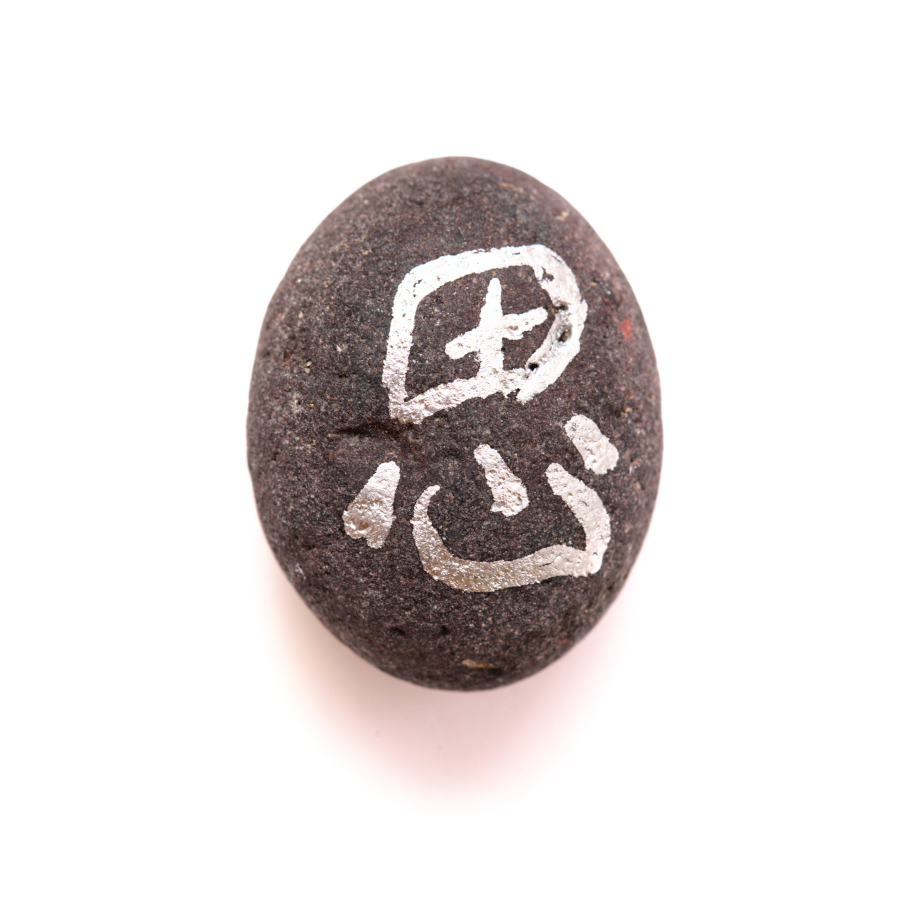
思 | sī

In Mandarin Chinese, 思 (Pinyin: sī 🔊) has several meanings related to our mental activity. It could be a verb for “to think”, “to miss”, “to yearn for”, “to hope”, “to wish”, “to lament” or “to grieve for”; or a noun for “thought”, “idea”, “feeling” or “mood”. So 我思你 or 我思妳 (wǒ sī nǐ) may mean “I miss you” or “I think about you”. Thus Cartesian Cogito, ergo sum, translated to Chinese as 我思故我在, acquires a wonderful polysemy: not just “I think therefore I am” but also “I hope therefore I am”, “I yearn therefore I am” and even “I grieve therefore I am” — all are aspects of human existence.

As you can see, 思 is made of 田 “field” on top of 心, “heart/mind”. But why “field”? According to Wiktionary, the original form of this character was 恖, a phono-semantic, or maybe also ideogrammic, compound of 囟 “fontanel” and 心 “heart”. Then 囟 was “corrupted” into the unrelated 田. The Uncle Hanzi’s page shows that this “corruption” was no more than a 45° rotation of the “cross in a box”; there’s much more variation in the shape of the “heart”.

Lawrence J. Howell writes in his Etymological Dictionary of Han/Chinese Characters:

The relevant oracle bone form of this character shows that the top element was originally not 田 field but a depiction of a profusion of fine bones in fontanels, open spaces in an infant’s skull over which the skull bones eventually fuse <...> 思 adds 心 heart/emotions → finely detailed thoughts → think; consider; believe → be sunk in thought.
Etymology aside, I prefer to think of 思 as a ship with a square sail and oars, because to think is to sail.

Compounds of 思 include

  • 三 + 思 = 三思 (sānsī): to think twice (literally, “think thrice”)
  • 不 + 思 = 不思 (bùsī): to not take into consideration
  • 思 + 春 = 思春 (sīchūn): to have thoughts of love
  • 思 + 力 = 思力 (sīlì): power of thought, intellect
  • 思 + 乡 “country”, “village” = 思乡 (sīxiāng): to be homesick
In Japanese, 思 (omu) seems to only have one meaning, “to think”.

柿に思ふ
奈良の旅籠の
下女の顔
子規
Kaki ni omou Nara no hatago no gejo no kao
The persimmons make me think
Of the face of a servant
At an inn of Nara.
年々に
菊に思はん
思はれん
子規
Nen nen ni kiku ni omowan omowaren
Every year
Thinking of the chrysanthemums,
Being thought of by them.
Shiki

(All haiku translated by R.H. Blyth)

More photos related to thought, hanzi and calligraphy @ Shutterstock.