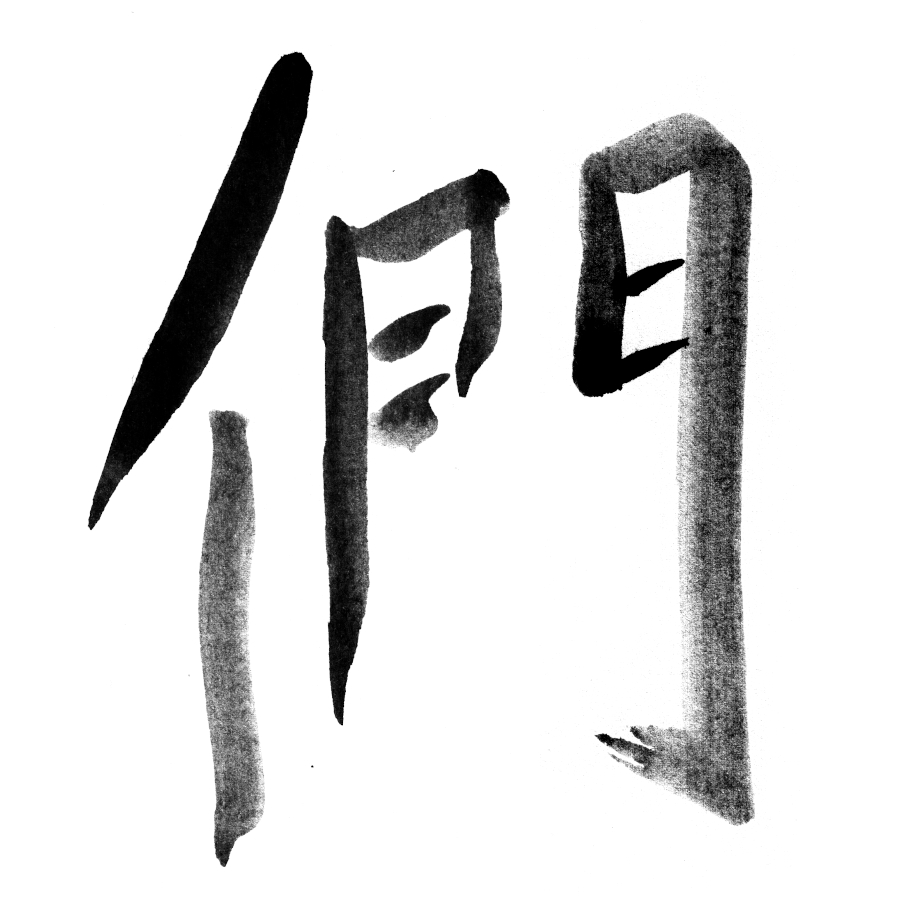
In Mandarin Chinese, 门 (Pinyin: mén 🔊) is a word of many meanings, all of which are ultimately derived from “gate”:
- gate; door; entrance; opening
- valve; switch
- knack, way of doing something
- school of thought
- class, category
- measure word used for academic subjects, courses and branches of technology
门 is a simplified form of the traditional character 門. Lawrence J. Howell in his Etymological Dictionary of Han/Chinese Characters describes 門 as a
depiction of a curving, double-doored gate, the doors adhering tightly in concealing what lies behind it.
It won’t surprise you then to know that a half of this character, 戶, means a single door.
I find the traditional character more pleasing aesthetically and easier to remember; the simplified one 门 is easier to write but it makes me think rather of a fridge door or power switch ⏻ than of the “real” gate.
The many compounds of 门 include
- 门 + 口 = 门口 (ménkǒu): entrance
- 门 + 人 = 门人 (ménrén): door guard
- 出 + 门 = 出门 (chūmén): to go out; to leave home for a far place; to get married (of a woman)
- 龙 + 门 = 龙门 (lóngmén): gateway to success; fame; glory
- 山 + 门 = 山门 (shānmén): monastery gate
- 水 + 门 = 水门 (shuǐmén): floodgate, sluice, water valve
- 玉 + 门 = 玉门 (yùmén): “jade gate” (literary, figuratively) palace; (euphemism) vulva
as well as Chinese toponyms such as
And not just Chinese: for example, 水门, apart from “floodgate”, is also a literal translation of Watergate. As the back-formed suffix -gate is used in English to form the names of scandals (such as Climategate, Irangate, Nipplegate etc.), so does 门 in Chinese.
In Japanese, 門 is pronounced mon or kado. We already read a haiku by Buson featuring gates; here are some more:
埋火や
夜ふけて門を
たたく音
許六
Umorebi ya yo fukete mon wo tataku oto
A banked fire;
It is deep night;
Knocking at the gate.
Kyoroku
|
門口に
來て凍るなり
三井の鐘
一茶
Kadoguchi ni kite kōrunari Mii no kane
Reaching the gate,
The bell of Mii temple
Freezes.
|
More photos of gates, doors and sea glass @ Shutterstock.