Showing posts with label mathematics. Show all posts

Thursday, 8 June 2017

ψ | psi

The letter ψ (psi) was yet another Greek addition to the alphabet, placed after the letters of Phoenician origin, along with φ, χ and ω. According to Wikipedia,

The letter’s origin is uncertain. It may or may not derive from the Phoenician alphabet. It appears in the 7th century BC, expressing /ps/ in the Eastern alphabets, but // in the Western alphabets (the sound expressed by Χ in the Eastern alphabets).

The letter ψ has a number of uses in maths and sciences, including

More photos related to letters, numbers and sea glass @ Shutterstock.

Wednesday, 7 June 2017

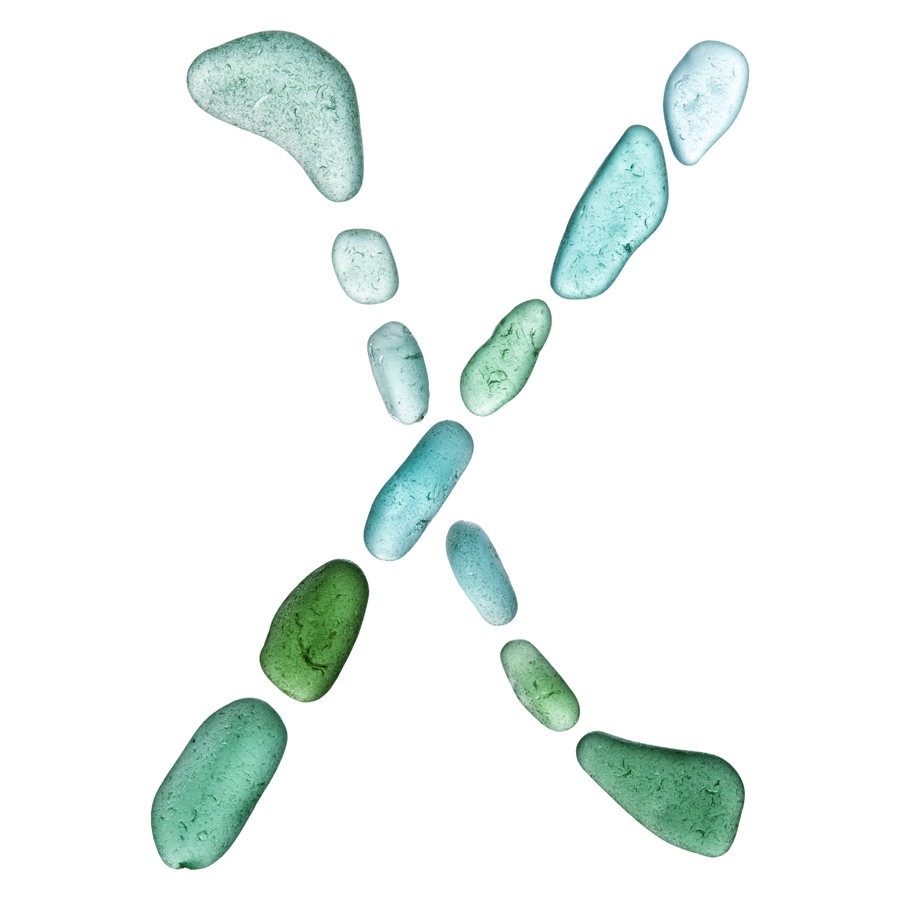
χ | chi

The letter χ (chi) was a Greek addition to the alphabet, placed after the letters of Phoenician origin, along with φ, ψ and ω. According to Wikipedia,

In Ancient Greek, ‘Χ’ and ‘Ψ’ were among several variants of the same letter, used originally for // and later, in western areas such as Arcadia, as a simplification of the digraph ‘ΧΣ’ for /ks/. In the end, more conservative eastern forms became the standard of Classical Greek, and thus ‘Χ’ (Chi) stands for // (later /x/). However, the Etruscans had taken over ‘Χ’ from western Greek, and it therefore stands for /ks/ in Etruscan and Latin.

The Greek χ gave rise to the Latin X, Gothic enguz 𐍇 and Cyrillic Х.

The lower-case χ has a number of uses in maths and sciences:

More photos related to letters, numbers and sea glass @ Shutterstock.
Tuesday, 6 June 2017

μ | mu

The Greek letter μ (mu) arose from the ancient Phoenician letter 𐤌 (mēm) which, in turn, was derived from the Egyptian hieroglyph for water, 𓈖.

The lower-case μ has many uses in maths, engineering and sciences, for example:

More photos related to letters, numbers and sea glass @ Shutterstock.

Thursday, 1 June 2017

τ | tau

The Greek letter τ (tau) was derived from the ancient Phoenician letter 𐤕 (tāw) which, in turn, was derived from an Egyptian hieroglyph meaning “mark”.

The lower-case τ has many uses in maths, engineering and sciences, such as

More photos related to letters, numbers and sea glass @ Shutterstock.

Wednesday, 31 May 2017

ω | omega

The letter ω (omega) is the 24th and last letter of the Greek alphabet. It was first introduced in the 7th century BC as a broken-up at the side variant of omicron. This letter was adopted into the early Cyrillic alphabet as Cyrillic omega (Ѡ, ѡ), with both upper- and lower-case letters similar to the Greek lower-case ω.

The lower-case ω has quite a few uses in maths, engineering and sciences, for example

More photos related to letters, numbers and sea glass @ Shutterstock.

Tuesday, 30 May 2017

ρ | rho

The Greek letter ρ (rho) was derived from the ancient Phoenician letter 𐤓 (rēš), which is thought to have come from a pictogram of a head. As a numeral, ρ has a value of 100. Incidentally, this is our 100th post.

The lower-case ρ (or its variant ϱ) has many uses in maths and sciences, such as:

More photos related to letters, numbers and sea glass @ Shutterstock.

Monday, 29 May 2017

ξ | xi

The Greek letter ξ (xi) was derived from the ancient Phoenician letter 𐤎 (sāmek), which, in its turn, could have evolved from the Egyptian hieroglyph 𓊽 (djed), representing the spinal column. Other theories say 𐤎 meant “fish” (actually showing a fish skeleton?) or “a tent peg”.

The lower-case ξ has a number of uses in maths and sciences, including

More photos related to letters, numbers and sea glass @ Shutterstock.

Tuesday, 23 May 2017

σ | sigma

The Greek letter σ (sigma) was derived from the ancient Phoenician letter 𐤔 (šīn) which meant “tooth”.

ς is the lower-case letter sigma (σίγμα τελικό) when used as the final letter in a word.

The lower-case σ has been widely adopted in maths and sciences, for instance:

More photos related to letters, numbers and sea glass @ Shutterstock.
Monday, 22 May 2017

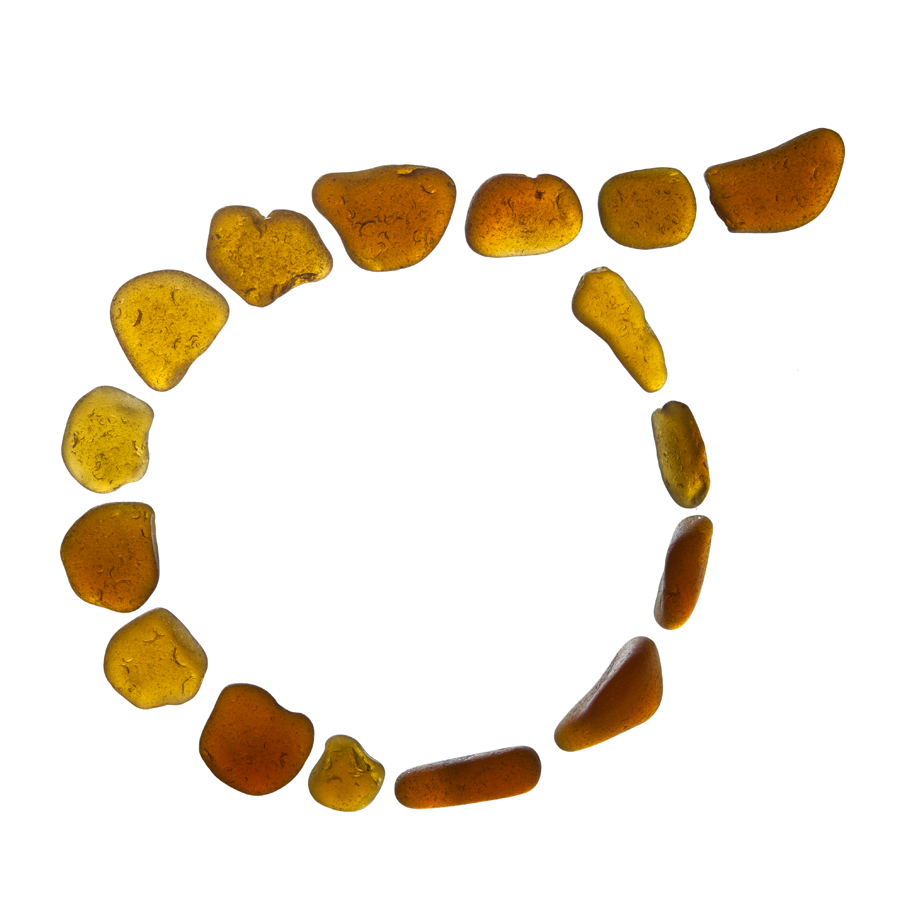
λ | lambda

The Greek letter λ (lambda) was derived from the ancient Phoenician letter 𐤋 (lāmed) which meant “goad” (a cattle prod).

The lower-case letter λ has many uses in maths, engineering and sciences, including:

λ is also one of the international symbols for LGBT rights.

More photos related to letters, numbers and sea glass @ Shutterstock.

Sunday, 21 May 2017

κ | kappa

The Greek letter κ (kappa) was derived from the ancient Phoenician letter 𐤊 (kāp) which meant “palm” (of a hand).

The lower-case κ is pretty much just a smaller version of the upper-case Κ and is virtually indistinguishable from the upper-case Roman K as well as the Cyrillic К/к. I prefer using the cursive ϰ.

The lower-case κ and/or cursive ϰ have quite a few uses in maths, engineering and sciences, for instance:

More photos related to letters, numbers and sea glass @ Shutterstock.

Saturday, 20 May 2017

ι | iota

The Greek letter ι (iota) was derived from the ancient Phoenician letter 𐤉 (yōd) which meant “arm”. The archaic Cyrillic iota looks exactly the same.

The lower-case ι looks too similar to the Latin letters i and l to be widely used as a symbol on its own. Still, it has been adopted in maths and sciences, for instance:

  • in biochemistry: ι-toxin, a pore forming toxin from Clostridium perfringens
  • in mathematical logic: a definite description operator
  • in natural product chemistry: ι-carrageenan, a polysaccharide extracted from red algae that gels in the presence of calcium ions

More photos related to letters, numbers and sea glass @ Shutterstock.

Friday, 19 May 2017

〇 | líng

In Mandarin Chinese, (Pinyin: líng 🔊) is a word for number zero.

In AD 690, Wu Zetian (624—705), the only Empress Regnant in the history of China, adopted a number of new characters, one of which was . Originally, it was meant to replace the unwieldy character “star”. After the Empress’s death, the new characters fell into disuse. In 1247, Qin Jiushao (ca. 1202—1261) found a new job for . It was introduced as the symbol for zero in his work 數書九章 (Shùshū Jiǔzhāng, “Mathematical Treatise in Nine Sections”). Another hanzi with the same meaning, , is mainly used for financial purposes.

More photos related to numbers and sea glass @ Shutterstock.

Thursday, 18 May 2017

0 | zero

Probably the first documented use of a number zero in the Old World was by Claudius Ptolemy in the Almagest (ca. 130 AD), although in the Americas the concept and symbol for zero existed much earlier.

Ptolemy employed the symbol ο̄ (“Hellenistic zero”) within a Babylonian sexagesimal numeral system. The oldest known mention of zero and the decimal positional system are found in the Jainist cosmological text Lokavibhāga (AD 458). By the 11th century, the Hindu–Arabic numeral system, complete with zero, reached Europe.

In my handwriting, I almost always write this digit as a slashed zero, 0.

More photos related to letters, numbers and sea glass @ Shutterstock.

Wednesday, 17 May 2017

θ | theta

The Greek letter θ (theta) was derived from the ancient Phoenician letter 𐤈 (ṭēt) which meant “wheel”. The Cyrillic letter Ѳ (fita), derived from θ, was a part of the Russian alphabet until 1918. Gogol wrote in a footnote to Dead Souls:

«Ѳетюкъ — слово обидное для мужчины, происходитъ отъ Ѳ, буквы, почитаемой нѣкоторыми неприличною буквою.»
(“Thetuk” is an offensive word to a man, it comes from Ѳ, a letter thought by some indecent.)

Speaking of decency: according to Real Academia Española, this letter should be called zeta, perhaps to avoid using the word teta, while the letter ζ is supposed to be called dseta.

The lower-case letter θ has quite a few uses in maths and sciences, for instance:

More photos related to letters, numbers and sea glass @ Shutterstock.

Monday, 15 May 2017

η | eta

The Greek letter η (eta) was derived from the ancient Phoenician letter 𐤇 (ḥēt) which, in turn, was derived from an Egyptian hieroglyph of courtyard, 𓉗.

The lower-case letter η has quite a few uses in maths, engineering and sciences, for instance:

More photos related to letters, numbers and sea glass @ Shutterstock.

Sunday, 14 May 2017

ζ | zeta

The Greek letter ζ (zeta) was derived from the ancient Phoenician letter 𐤆 (zayin) which meant “sword” or some other weapon.

In the system of Greek numerals, the letters α to ε have the respective values 1 through 5. Bizarrely, ζ has the value of 7. This may account for the fact that chemists don’t like using Greek letters beyond ε when numbering the atoms in the chain. Still, the lower-case letter ζ has some uses in maths and sciences, for example:

More photos related to letters, numbers and sea glass @ Shutterstock.

Friday, 12 May 2017

ε | epsilon

The Greek letter ε (epsilon) was derived from the ancient Phoenician letter 𐤄 () which meant “window”. In its turn, ε gave rise to the Latin e and a number of other letters.

The lower-case letter ε has a number of uses in maths and sciences:

α through ɛ appears to be the extent to which most people know the letter sequence of the Greek alphabet.

More photos related to letters, numbers and sea glass @ Shutterstock.

Thursday, 11 May 2017

δ | delta

The Greek letter δ (delta) was derived from the ancient Phoenician letter 𐤃 (dālet) which, in turn, was derived from 𓉿, an Egyptian hieroglyph depicting a door.

The lower-case letter δ has many uses in maths and sciences, such as:

More photos related to letters, numbers and sea glass @ Shutterstock.

Wednesday, 10 May 2017

γ | gamma

The Greek letter γ (gamma) was derived from the ancient Phoenician letter 𐤂 (gīml). One theory says that it represented a throwing stick, another links it to (an image of) a camel.

The lower-case letter γ has a number of uses in maths and sciences, for example:

  • in astronomy: the third brightest star in a constellation. For instance, Bellatrix is designated as γ Orionis.
  • in inorganic chemistry: a symbol for certain allotropes, for example γ-iron (austenite) or γ-sulfur
  • in mathematics: the Euler—Mascheroni constant, a mathematical constant with approximate value of 0.57721
  • in organic chemistry: γ-carbon, the third carbon atom in a chain when counting from a functional group. The names such as γ-aminobutyric acid (GABA) make use of this nomenclature.
  • in neurophysiology: γ-waves, a type of brain waves detected by electroencephalography
  • in phonetics: voiced velar fricative (IPA symbol ɣ)
  • in physics: γ is the symbol for a photon, probably derived from γ-rays or γ-radiation, a kind of electromagnetic radiation arising from the radioactive decay (γ-decay)
  • in special relativity: Lorentz factor

More photos related to letters, numbers and sea glass @ Shutterstock.

Tuesday, 9 May 2017

β | beta

The Greek letter β (beta) was derived from the ancient Phoenician letter 𐤁 (bet). The word alphabet originates from the Greek ἀλφάβητος (alphabētos), from ἄλφα (“alpha”) + βῆτα (“beta”).

The lower-case letter β has found many uses in maths and sciences:

  • in astronomy: the second brightest star in a constellation. For instance, Rigel is designated as β Orionis
  • in biochemistry: β-sheet, a type of protein secondary structure
  • in biology: β cell, a type of cell found in the pancreatic islets of the pancreas. The primary function of a β cell is to produce insulin.
  • in inorganic chemistry: a symbol for certain allotropes, for example β-tetragonal boron, β-germanium, and β-tin
  • in mathematics: β(s), the Dirichlet beta function
  • in natural product chemistry: a stereodescriptor used in a number of different ways
  • in nuclear physics: beta particle, a high-energy electron (β) or positron (β+) emitted in the radioactive decay; β-decay is a radioactive process in which an atomic nucleus emits an β-particle
  • in organic chemistry: β-carbon, the second carbon atom in a chain when counting from a functional group
  • in pharmacology: β1, β2 and β3, subtypes of adrenergic receptors
  • in phonetics: voiced bilabial fricative (IPA symbol β)
  • in special relativity: a symbol for the speed of an object relative to the speed of light: β = v/c
  • in thermodynamics and fluid mechanics: a symbol for compressibility
  • in zoology: β animals, which often act as second-in-command to the reigning α-males and/or α-females

More photos related to letters, numbers and sea glass @ Shutterstock.